

The debate surrounding Steve McManaman‘s international career remains one of English football’s great paradoxes. How could a player deemed essential for Real Madrid—a club where only the world’s elite thrive—struggle to cement a place in the England national team under Sven-Göran Eriksson? Even his legendary teammates, like Roberto Carlos and Raúl, expressed shock at his exclusion. Through data and tactical analysis, we uncover the underlying reasons behind this puzzling chapter in Three Lions history.

The Statistical Divide: Club vs. Country
A deep dive into the Opta statistics from that era reveals a startling discrepancy in McManaman‘s performance levels. For Real Madrid in La Liga, he completed an impressive 83% of his passes. This figure remained consistently high, at 82%, in the UEFA Champions League—the most demanding club competition in the world. However, when pulling on the England shirt, his pass completion rate plummeted to 73%.
This trend was even more pronounced in what was considered his greatest strength: dribbling. In Spain’s top flight, he successfully completed 85% of his dribbles and driving runs. In Europe, that number was a still-remarkable 83%. Yet for England under Eriksson, he managed to retain possession during these actions only 63% of the time. This significant drop highlights a player operating with far less confidence and effectiveness on the international stage.
The Tactical Mismatch: Square Peg, Round Hole
The common argument was that McManaman could have been the solution to England’s perennial problem on the left side of midfield. However, the data further complicated this theory. Despite his obvious talent, McManaman failed to deliver a single accurate cross during his England appearances under the Swedish manager.
This wasn’t necessarily a flaw in his game. At both Liverpool and Real Madrid, his role was not that of a traditional touchline-hugging winger tasked with whipping balls into the box. His clubs utilized him in a free, roaming playmaking role, focused on intricate passing, pulling defenders out of position, and creating space. Eriksson’s system, however, favored a more conventional 4-4-2 with wingers expected to provide width and direct service—a requirement that didn’t play to McManaman’s core strengths.
A Clash of Philosophies
The core of the issue lay in a fundamental philosophical clash. As noted by Baji live football analyst Mark Thompson, “McManaman was a product of a possession-based system. At Liverpool under Roy Evans and especially at Real Madrid, he was part of sides that valued patient build-up, ball retention, and fluid positional interchange. They aimed to pass teams into submission.”
England’s approach at the time was markedly different. The style was more direct, less patient, and relied on maintaining a rigid structural shape. This disciplined 4-4-2 system left little room for the kind of creative freelancing that allowed McManaman to flourish at the club level. He was a player who needed the entire team to play in a certain way to maximize his impact, and the national team setup was not configured to provide that.
The Enduring Legacy and What-Ifs
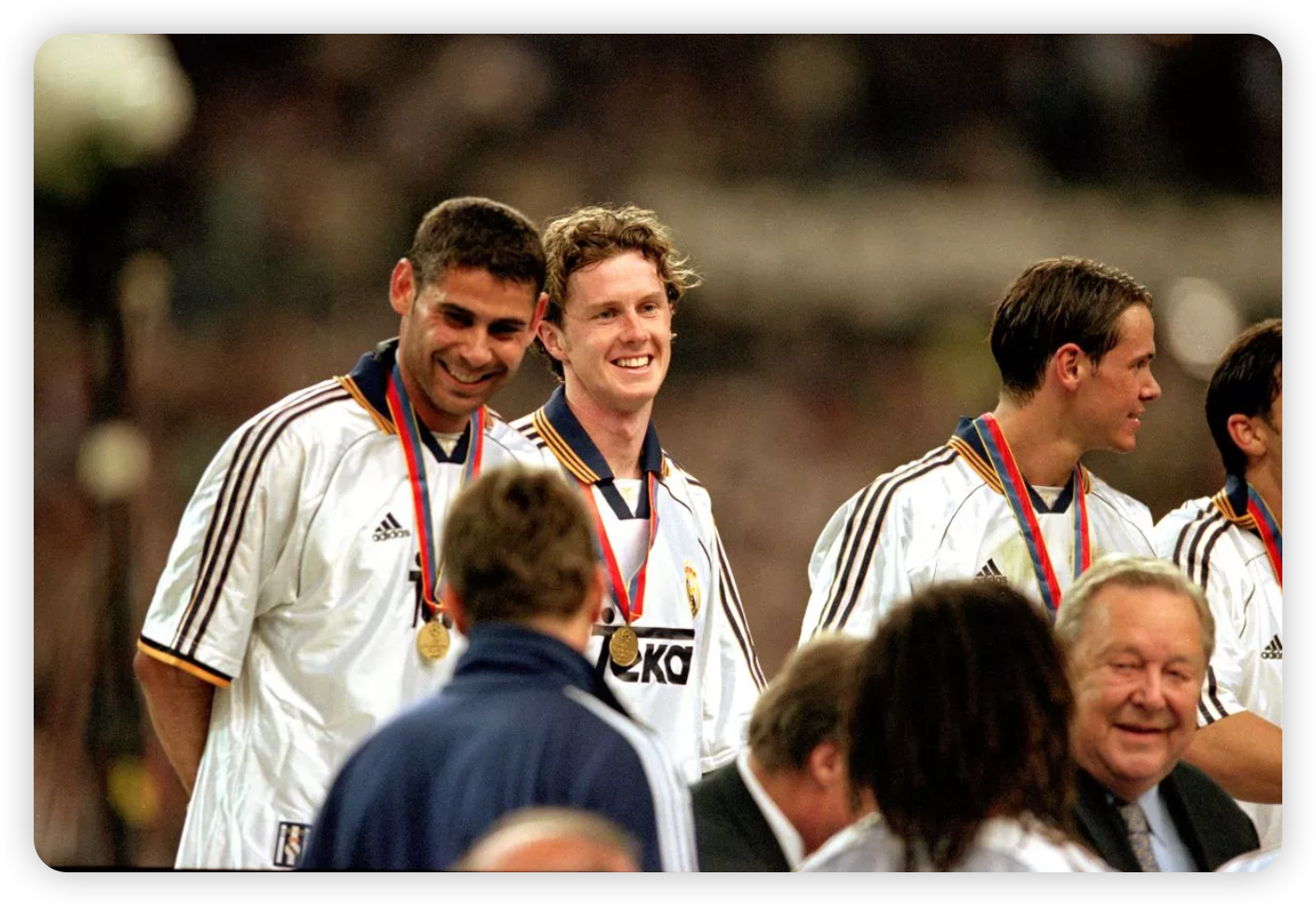
It remains a strange footnote in history that a two-time Champions League winner with Real Madrid spent a major international tournament watching from home. The image of McManaman, with his winner’s medals, watching England struggle to break down deep-lying defenses is deeply ironic—dismantling stubborn defenses was precisely what he had been doing all season in Spain.
The lesson from McManaman’s England career is that talent alone is not always enough. Tactical fit, team philosophy, and player confidence are equally critical components of international success. Unless the England team evolved to hold possession for prolonged periods and embrace a more fluid style, a player of his unique profile was always going to find it difficult to shine.
## Why Steve McManaman’s England Omission Still Puzzles Fans and Experts Alike
Steve McManaman’s story serves as a fascinating case study in the complex relationship between individual brilliance and tactical systems. His excellence at the very highest level of club football is undeniable, yet it never fully translated to the international game due to a misalignment of style and expectation. While pundits and fans at the time, and even now on platforms like Baji live, debate the “what-ifs,” the data clearly shows a player caught between two contrasting footballing identities. His career reminds us that sometimes, even the brightest stars need the right constellation around them to shine.
What do you think? Should Eriksson have adapted his system to accommodate a talent like McManaman? Share your thoughts and memories of that era in the comments below.
