
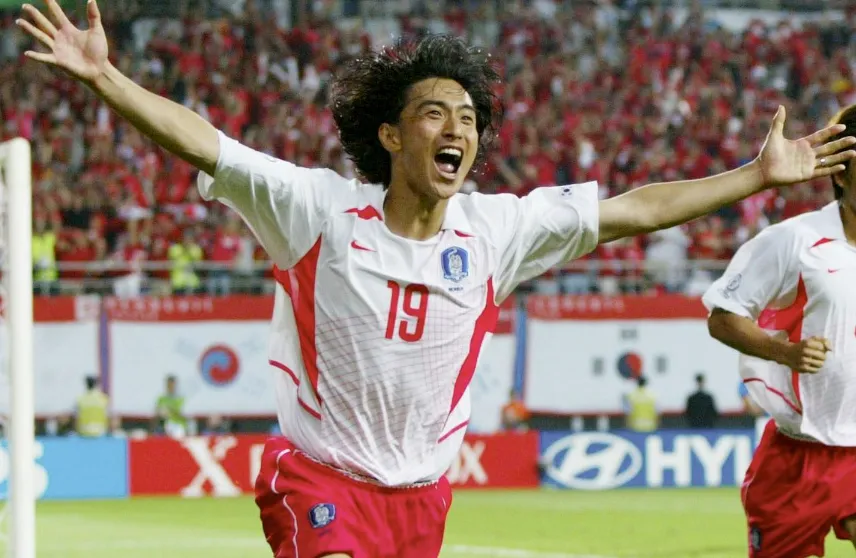
The roar of the Red Devils, the shock of the world, and the birth of a footballing nation. For many, the 2002 FIFA World Cup is remembered for Brazil’s triumph and Ronaldo’s redemption. But for one co-host nation, it was the stage for a sporting miracle that transcended football, reshaping national identity and pride. This is the story of South Korea‘s unforgettable journey to the semi-finals, a tale of grit, controversy, and unbridled euphoria that we explore here on Baji Live.
The Stage is Set: Low Expectations and a Fervent Home Crowd
Entering the tournament as joint hosts with Japan, the South Korean national team carried the hopes of a nation but little global expectation. Their squad, while determined, lacked the star power of traditional football powerhouses. However, under the shrewd guidance of experienced Dutch coach Guus Hiddink, a quiet confidence was brewing. Drawn into a challenging Group D with the United States, Portugal, and Poland, the Taeguk Warriors faced a daunting task. Yet, they possessed one immeasurable advantage: the fervent, deafening support of a home crowd that turned every stadium into a sea of red.
Dr. Jung Woo Lee, an academic specializing in sport and leisure policy who was living in South Korea at the time, recalls the shifting national mood. “Before the 2002 World Cup, Korean fans had hoped that one day their national team would win a match at the tournament and would go through a group stage,” he shared in an exclusive interview with Baji Live. The early results—a win over Poland, a draw with the USA, and a stunning victory against a Luis Figo-led Portugal—saw them top the group. The dream was alive, but the real test was just beginning.
The Daejeon Drama: Toppling the Azzurri Amid Controversy
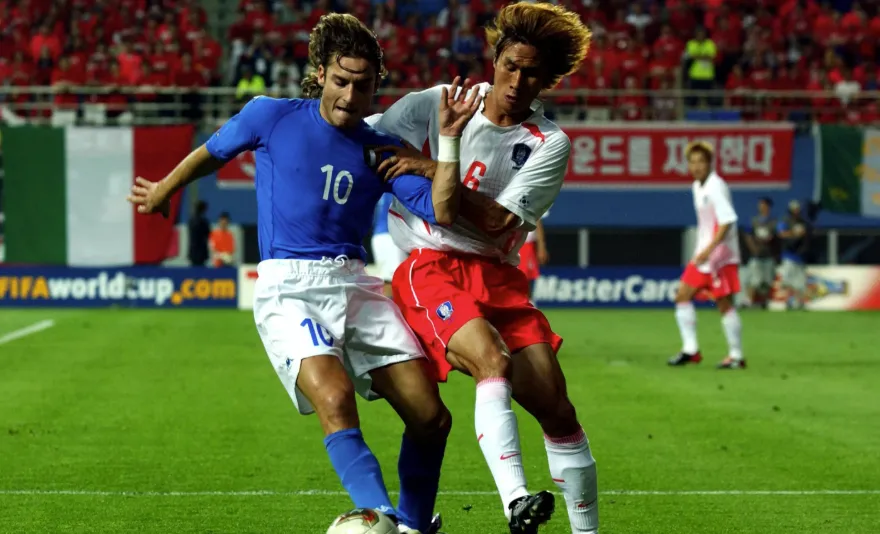
The reward for winning the group was a round-of-16 clash with the mighty Italy, a team boasting legends like Paolo Maldini, Francesco Totti, and Alessandro Del Piero. For most observers, South Korea’s dream run was about to meet a harsh reality. The match in Daejeon, however, would become one of the most controversial and dramatic in World Cup history.
Christian Vieri’s early goal for Italy seemed to set the expected script. But South Korea, employing an intensely physical and high-energy approach, refused to yield. The game’s narrative became intertwined with the performance of Ecuadorian referee Byron Moreno, whose decisions—including disallowing a Damiano Tommasi goal for offside in extra time—sparked enduring fury in Italy. South Korea’s relentless pressure finally told when Seol Ki-hyeon equalized in the 88th minute, sending the match into a golden-goal extra time.
With the specter of penalties looming, Ahn Jung-hwan, who played his club football for Serie A’s Perugia at the time, rose to head home the winner. The stadium and the nation erupted. The aftermath saw petty retaliation from Perugia and, years later, legal trouble for Moreno, but for South Korea, it was pure, unadulterated glory. They had slayed a giant.
A Nation Transformed: Flags, Faith, and Fernando Hierro
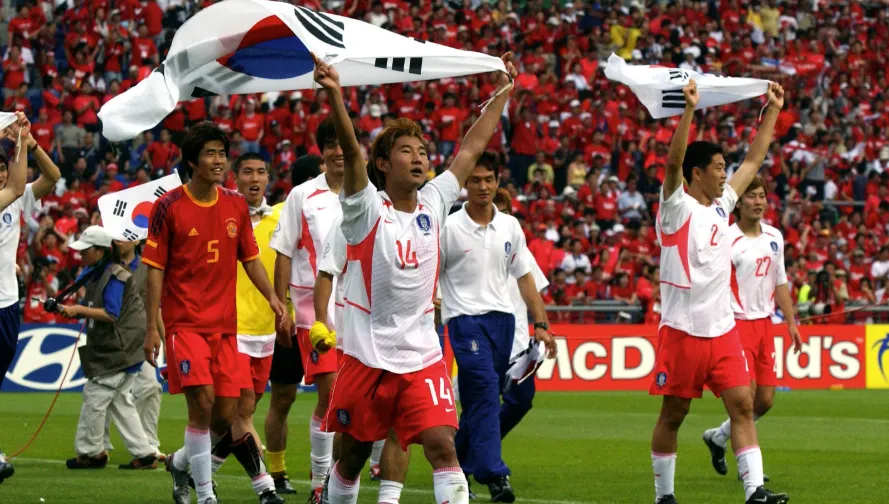
The victory over Italy unleashed a wave of patriotism unlike anything modern South Korea had seen. Dr. Lee notes a profound cultural shift: “Before the 2002 World Cup, the Korean national flag was considered a sacred object… As joyful nationalistic feeling dominated the country during the World Cup, people began to see the national flag as a more friendly and accessible object.” The Taegukgi was everywhere—on cars, clothes, and faces—symbolizing a new, confident, and unified national spirit.
This spirit carried the team into a quarter-final against Spain in Gwangju. Facing a defense marshaled by Iker Casillas and Fernando Hierro, South Korea dug deep once more. After a tense 120 minutes of goalless football, the drama moved to penalties. A saved spot-kick from Spain’s Joaquin set the stage for captain Hong Myung-bo, who coolly converted to send South Korea into the semi-finals.
The Dream Meets Its End: Legacy Over Trophy
The fairy tale finally met its end in the semi-final against Germany. A solitary 75th-minute goal from Michael Ballack proved the difference, halting South Korea’s miraculous run just short of the final. While the dream of lifting the trophy was over, the legacy was only beginning. The team returned home not as losers, but as national heroes who had placed South Korea firmly on the world football map.
Guus Hiddink*Mastermind Guus Hiddink earned honorary citizenship for his role in orchestrating one of football’s greatest underdog stories, a testament analyzed deeply on platforms like **Baji Live**.*
The impact was profound and lasting. Dr. Lee connects the success to the nation’s broader recovery: “The 2002 FIFA World Cup took place a few years after the East Asian Financial Crisis… The impressive performance of the Korean team… boosted Korean people’s confidence and made them proud of their nation once again.” Guus Hiddink was granted honorary citizenship, and a new generation of Korean players was inspired to reach for the highest levels of the game.
Reliving the Miracle: How South Korea’s 2002 World Cup Run Captivated a Nation and Changed Football Forever
Two decades on, the 2002 World Cup remains a defining chapter in South Korea’s sporting history. It was more than a successful tournament; it was a cultural phenomenon that redefined national pride, showcased the power of home support, and proved that with the right blend of tactical nous and unwavering spirit, miracles on the pitch are possible. The echoes of that summer still resonate in Korean football today, a permanent reminder of what can be achieved when a team and a nation become one.
What are your most vivid memories of South Korea’s incredible 2002 run? Do you think such an underdog story could be repeated in today’s game? Share your thoughts and join the conversation in the comments below. Don’t forget to explore more iconic football moments and in-depth analysis right here on Baji Live.
