

In the world of professional football, few stories resonate as powerfully as that of Thomas Hitzlsperger. The former Germany international, who earned 52 caps during a distinguished 12-year career spanning six clubs across Europe, became a watershed moment in sports history when he came out as gay in January 2014. Now, nearly a decade later, Hitzlsperger continues to shape conversations about inclusion, acceptance, and the beautiful game’s responsibility to all its participants. In an exclusive interview, the man once nicknamed “The Hammer” for his ferocious left foot opens up about his journey, the challenges that remain, and why football must continue evolving.
The Journey from Player to Pioneer
Thomas Hitzlsperger‘s playing career reads like a football fan’s dream. From his early days at Aston Villa to memorable spells with Stuttgart, Lazio, West Ham United, Wolfsburg, and Everton, he established himself as one of Germany’s most reliable midfielders. His powerful left foot earned him the affectionate nickname “The Hammer,” while his leadership qualities saw him win 52 caps for his country. But it was after hanging up his boots in 2013 that Hitzlsperger would make perhaps his most significant contribution to the sport.
The Decision to Come Out
The process of coming out wasn’t instantaneous for Hitzlsperger. In fact, it took years of internal struggle before he felt ready to share his truth with the world. “For long parts of my career, it was not a problem,” he recalls. “I lived my dream. I played football and I was focused on being a professional football player. But towards the end of my career, it was clear to me that I’m gay, and I’ve got to face it: I can’t hide.”
The former midfielder admits he wasn’t ready to come out while still playing for Wolfsburg or Everton. “I wanted to come out while I was still playing, but I had to understand I wasn’t ready enough to take on the attention and the pressure that would come with it,” he explains. Instead, he spent years speaking first with family, then friends, building a support network before making his announcement public.
The Questions That Haunted Him
Before making his decision, Hitzlsperger wrestled with several difficult questions. “One question was, is it really necessary? Like, why do I need to tell the public about my private life?” he says. “Then the answer was more, I’m doing it less for myself, I’m doing more for others. Because I’m in the public eye, I can be a role model for others.”
He also worried about how teammates would react. “What would change in the dressing room? What if some of my teammates are uncomfortable with the fact that they have a gay teammate?” These concerns were balanced by his experience with fan criticism. “As a football player, you’re used to criticism, you’re used to abuse – it’s sad, but that’s part of the game,” he notes. “But being abused because your sexual orientation is a different matter.”
The Response and Progress Made
A Positive Reaction
When Hitzlsperger finally made his announcement, the response exceeded his expectations. “It was great. I really had a good time because I’d say 95 percent of the actions were positive,” he remembers. Messages of support poured in from around the world, with many praising his courage. “People said that it’s great that somebody takes the courage and talk about it.”
He emphasizes that his goal was to move the conversation forward. “In the past, I heard players just, oh, no, if there’s a gay player, they shouldn’t come out, it’s too difficult for them. So I wanted to add something to the debate that would move us forward.”
Changes Since 2014
Nearly a decade after his announcement, Hitzlsperger sees meaningful progress. “Yes, I do believe so,” he says when asked about changes. “I know people try to correct me and say ‘well, nobody else has come out since, or not a high-profile player in the game,’ and I say it’s not correct.”
He points to Josh Cavallo and Jake Daniels as examples of players who have followed his path. “Society has changed,” he notes. “I see there’s a better understanding within football clubs that being gay is accepted. You have more gay people working in clubs – not players, but working for the clubs. You see a lot of symbols and rainbow flags at clubs: they’re not shy anymore.”
The Persistent Challenges in Men’s Football
Why Men’s Football Lags Behind
Despite progress, Hitzlsperger acknowledges that men’s football still has significant work to do compared to other sports and women’s football. “In men’s football, there is a lot of attention and a lot of money involved, and I think it brings out the worst in people at times,” he observes.
He draws an important distinction between different forms of discrimination. “With being gay, you can choose whether you tell people or you don’t. If you’re Black, you can’t choose whether you show people or not,” he explains. “That’s why being gay sometimes is an advantage and a disadvantage at the same time.”
The Pain of Hiding
For Hitzlsperger, the last two or three years of his career were the most difficult. “When it was clear to me, look, there is no hiding, there is no excuse. You’re gay, you got to face it. That’s when it became complicated,” he says. He describes the mental toll of pretending: “I prefer to talk openly to my teammates, but I feel uncomfortable. What am I going to do? And then the whole process starts in your head.”
A Vision for the Future
Beyond the “Fight” Mentality
Hitzlsperger prefers not to frame inclusion as a “fight.” Instead, he emphasizes the need for clarity about football’s purpose. “People who say there shouldn’t be politics in football just don’t see the reality,” he argues. “There has always been politics in football. Just look at the vast amount of politicians that go to football matches.”
His approach is personal and consistent. “I will continue to do what I’m doing. I say I love football, but I will also say it is there for everybody. Nobody should be excluded. If people don’t see that way, they will have an argument with me.”
The Role of Clubs
Hitzlsperger believes change starts at the club level. “Every single club has the responsibility to take care of the people in the club, in the city they are at,” he says. Drawing from his experiences in England and Germany, he notes how clubs understand their role in bringing people together. “Because professional football is so huge, there’s so much money involved. Clubs have the resources to support the people in the area.”
Acknowledging Progress
While some might focus on what hasn’t changed, Hitzlsperger prefers to highlight positive developments. “Change is happening all the time and I wouldn’t be so negative and say a lot needs to change,” he insists. “There are so many good examples. When I came out nearly 10 years ago, there was so much positive reaction.”
He points to Jake Daniels’ story as particularly powerful. “He’s only just started his career and he said, look, this is who I am and let’s see what happens. And that’s what I see as an improvement. We are progressing, maybe at a slow pace, but we are progressing; we just need to keep doing it.”
Conclusion: Thomas Hitzlsperger: The Legacy of Football’s Trailblazer and His Vision for a More Inclusive Game on Baji Live
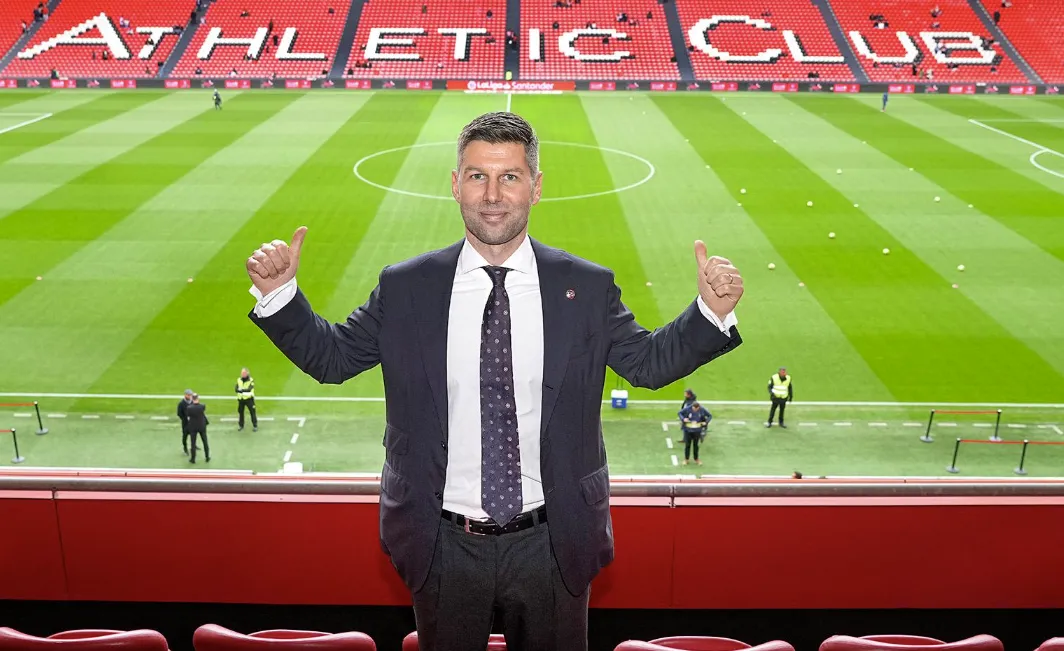
Thomas Hitzlsperger’s journey from professional footballer to LGBTQIA+ advocate represents one of the most important narratives in modern sports. His decision to come out, made nearly a decade ago, continues to inspire new generations of athletes. Through his work as a pundit, ambassador for Athletic Bilbao, and investor in Danish club Aalborg BK, Hitzlsperger remains deeply connected to the sport he loves while pushing it toward greater acceptance.
The challenges remain real, as he acknowledges. No active star player has yet come out, and discrimination still occurs. But Hitzlsperger’s message is one of hope and steady progress. “The main challenge is just to continue speaking up, talking about it, talking about the importance of acceptance in the game,” he says. “Make sure when discrimination happens, you’re clear that it’s unacceptable.”
For fans reading this, Hitzlsperger’s story reminds us that football’s true power lies not just in goals and trophies, but in its ability to bring people together. What are your thoughts on the progress of inclusion in football? Have you witnessed positive changes at your local club or in the sport you follow? Share your experiences in the comments below, and explore more in-depth analysis of football’s biggest stories on Baji Live.
